
Case Study
Overview
A global pharmaceutical company was working on a generic cladribine tablet,
and needed to demonstrate bioequivalence (BE) between its generic tablets and the reference listed drug (RLD), to support an FDA submission.
When traditional in vivo bioequivalence studies produced inconclusive results, they turned to mechanistic modeling with GastroPlus® to understand the underlying factors and strengthen their regulatory resubmission.
85%
Return on Investment
4
Months Saved
Challenge
Cladribine, a BCS Class 3 compound used to treat multiple sclerosis, presents unique formulation challenges. Although highly soluble, it is susceptible to acidic degradation and exhibits only moderate oral bioavailability. The researchers initially sought a BCS-based biowaiver for their generic formulation. However, the regulatory agency raised concerns regarding solubility and dissolution data.
A subsequent pilot BE study failed to demonstrate equivalence between the test and reference products due to a marginal failure in Cmax confidence intervals. The key questions became: how do solubility, dissolution, and pH-dependent degradation interact to affect cladribine’s pharmacokinetics (PK)? And could a validated physiologically based pharmacokinetic (PBPK) model mechanistically explain these observations?
Solution
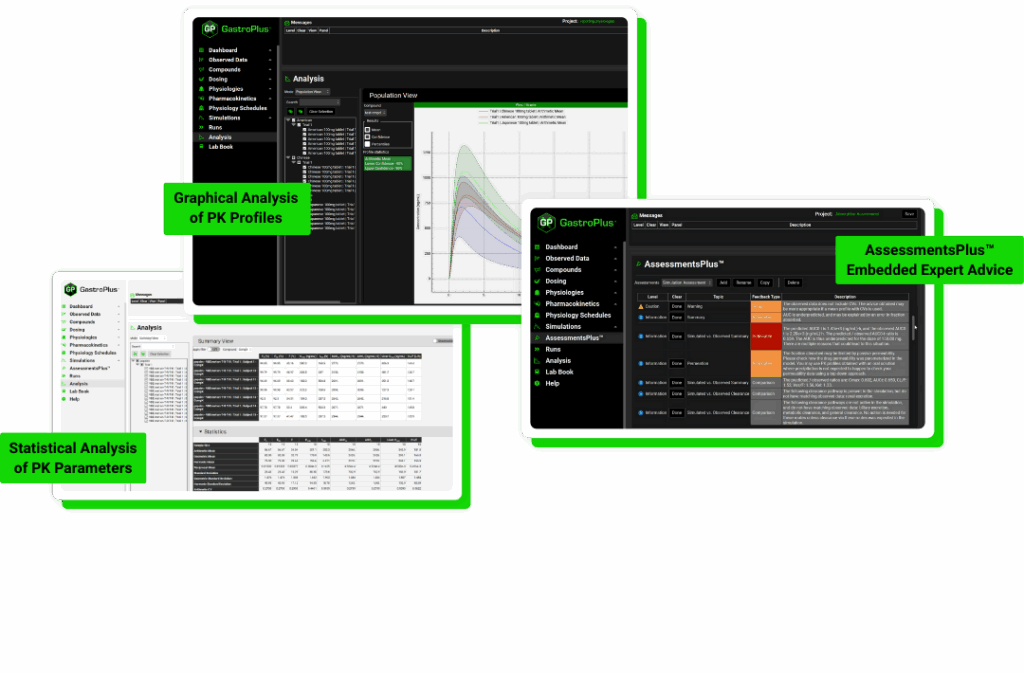
The client partnered with Simulations Plus to use GastroPlus®, the industry-leading PBPK modeling platform, to develop and validate a comprehensive absorption model for cladribine.
This model integrated physicochemical, biopharmaceutical, and gastrointestinal physiological parameters to predict in vivo performance across conditions—enabling virtual bioequivalence (VBE) studies and mechanistic exploration of formulation effects.
Results

Using GastroPlus, the team developed a mechanistic absorption/PBPK model that successfully captured cladribine’s complex behavior across intravenous, oral, food-effect, and PPI studies.
These findings provided mechanistic justification supporting the BCS-based biowaiver resubmission to the FDA, which was accepted. The GastroPlus-based modeling approach enabled the client to demonstrate that the generic cladribine formulation delivers equivalent therapeutic exposure to the RLD, while cutting an estimated four months of study time and saving an estimated $115,000 compared to conservatively estimated traditional study costs. The virtual BE study provided an 85% return on investment based on reduced costs, while ensuring comparable efficacy and safety for patients.
Learn how Simulations Plus can help accelerate your regulatory submissions, reduce clinical risk, and build confidence in bioequivalence outcomes using GastroPlus® PBPK modeling.