

01. PROMO
ADMET Predictor®

Drug Design Meets ADMET & PBPK

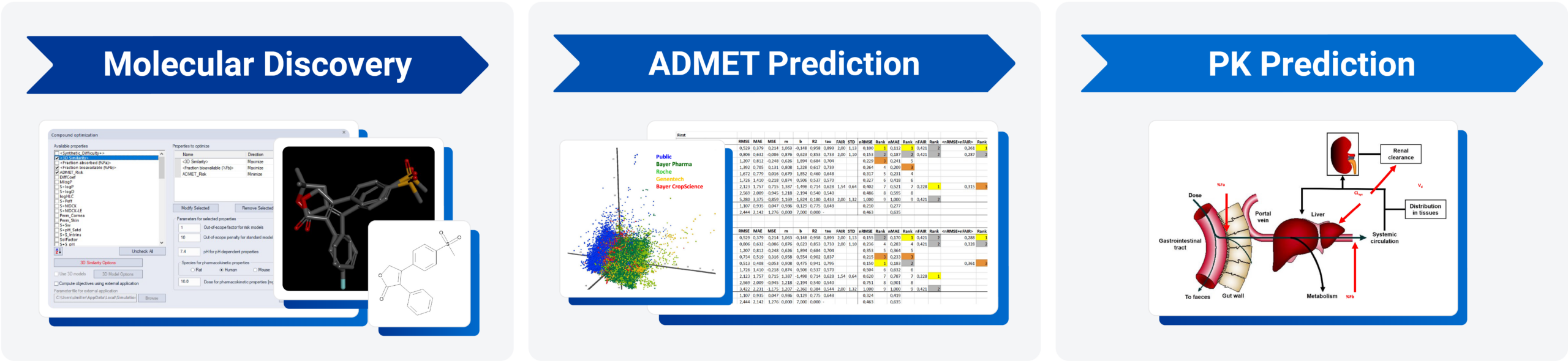
The ADMET (absorption, distribution, metabolism, excretion, and toxicity) and pharmacokinetic properties of your molecules are of vital importance. The ability to quickly and accurately predict these properties for thousands of molecules in seconds is beneficial in making decisions that can determine the success of your project. ADMET Predictor is a state-of-the-art platform that can support your entire early-stage discovery program through a M.A.P. workflow – molecular discovery, ADMET prediction and PK prediction. By integrating ADMET and PK awareness into the earliest design iterations, discovery chemists can identify and prioritize compounds that are both active and viable, streamlining the design-make-test-analyze (DMTA) cycle and reducing late-stage attrition.

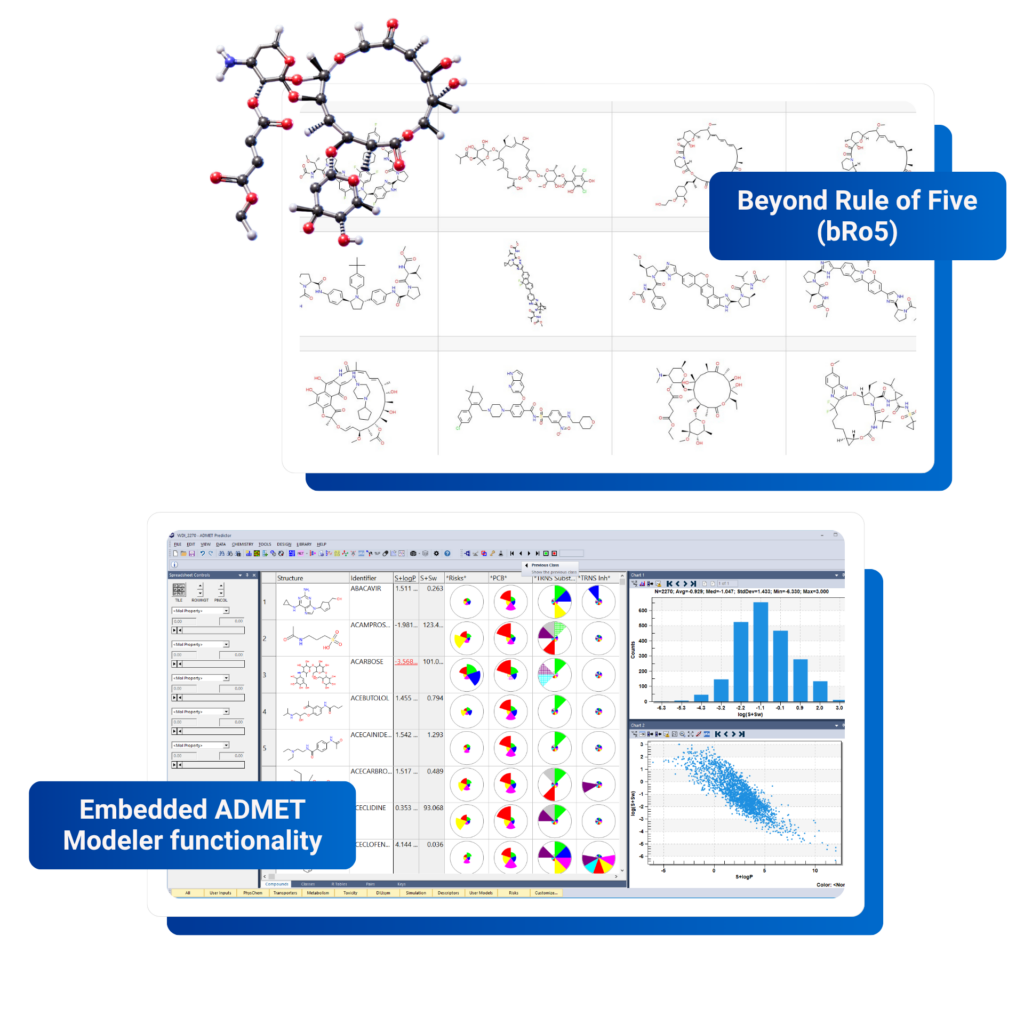
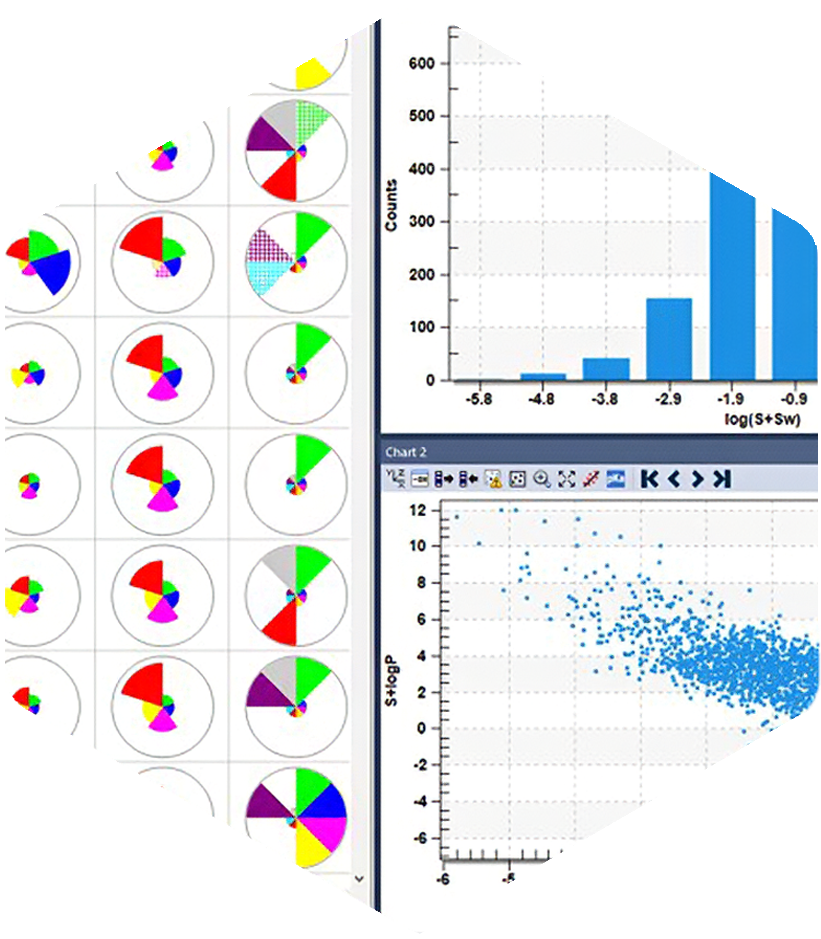
The image highlights ADMET Predictor's QSAR, CYP prediction, R-table, and de novo design features.

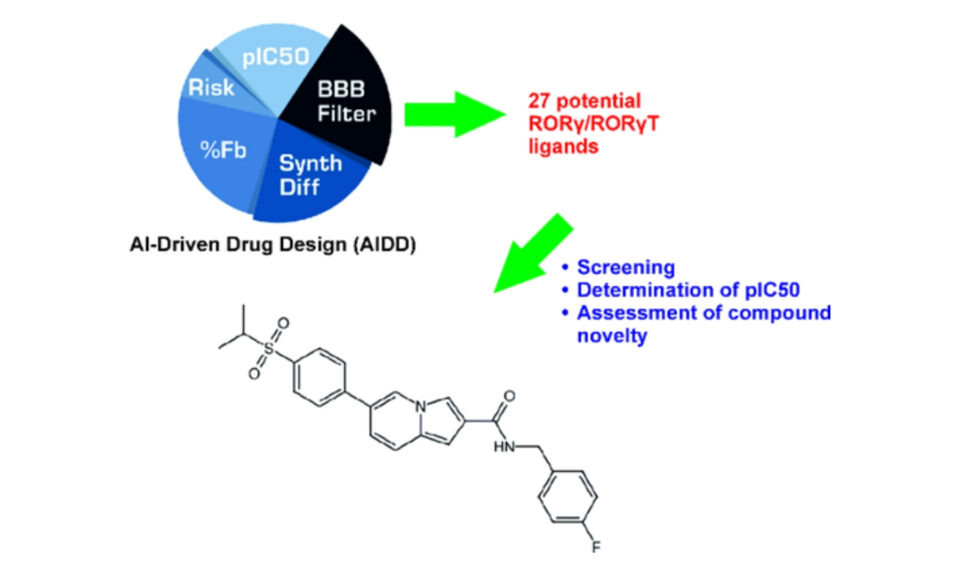
ADMET Predictor provides powerful cheminformatics solutions that support your design and lead optimization efforts, including the ability to conduct scaffold clustering, R group analysis, and MCDA-based prioritization. It can also generate 3D conformations to conduct ligand-based virtual screening against internal or commercial libraries. In addition to advanced volumetric shape and pharmacophore similarity, you can triage and rank hit selections based on predicted ADMET and PK properties. Furthermore, you can use our generative chemistry and multi-parameter optimization engine, the AI-Driven Drug Design (AIDD) module, to generate completely novel molecules that can be simultaneously optimized for activity, 3D similarity, and any other ADMET property models, as well as in vivo PK properties.

With the ability to predict 175+ ADMET and PK properties, you can triage compounds to select for synthesis and screening. ADMET Predictor has a choice of modules to support your requirements, such as the Physicochemical and Biopharmaceuticals (PCB) module, that includes our flagship pKa model amongst others, or our Metabolism & Transporters module, which allows you to predict metabolites across most CYP enzymes, or consider liver microsome and hepatocyte clearance for five species (human, monkey, dog, rate and mouse). You can also actively predict for Toxicity such as for hERG binding and AMES mutagenesis.

While we’ve built global models using both public and partner data and innovative molecular and atomic descriptors, we recognize you have your own proprietary datasets that support your specific programs. You can use your data to retrain our models for your needs, as well as use ADMET Modeler to construct your own structure-property and structure-activity models using our advanced descriptors.

The ability to conduct High-Throughput Pharmacokinetic (HTPK) Simulations, underpinned by our GastroPlus® ACAT™ model, allows designs to be evaluated against key PK parameters such as % fraction absorbed, volume of distribution and systemic clearance. The power of having such information at the earliest opportunity in a discovery process streamlines the DMTA cycle by focusing on the right compounds.

03. modules

ADMET Predictor® Modules

04. WHAT & HOW
Novel Approaches

ADMET Predictor is our AI/ML software platform that quickly and accurately predicts over 175 properties, including aqueous and biorelevant solubility vs. pH profiles, logD vs. pH curves, pKa, CYP and UGT metabolism outcomes, key toxicity endpoints including Ames mutagenicity and drug-induced liver injury (DILI) mechanisms, and major systemic PK endpoints using integrated high-throughput GastroPlus® PBPK simulations. Our models are trained on premium datasets spanning public and private partner sources, and several have ranked #1 in independent peer-reviewed comparisons.

ADMET Predictor provides you with:

  • Over 175 predicted properties
  • Model applicability domain assessments
  • Confidence estimates and regression uncertainty for all models
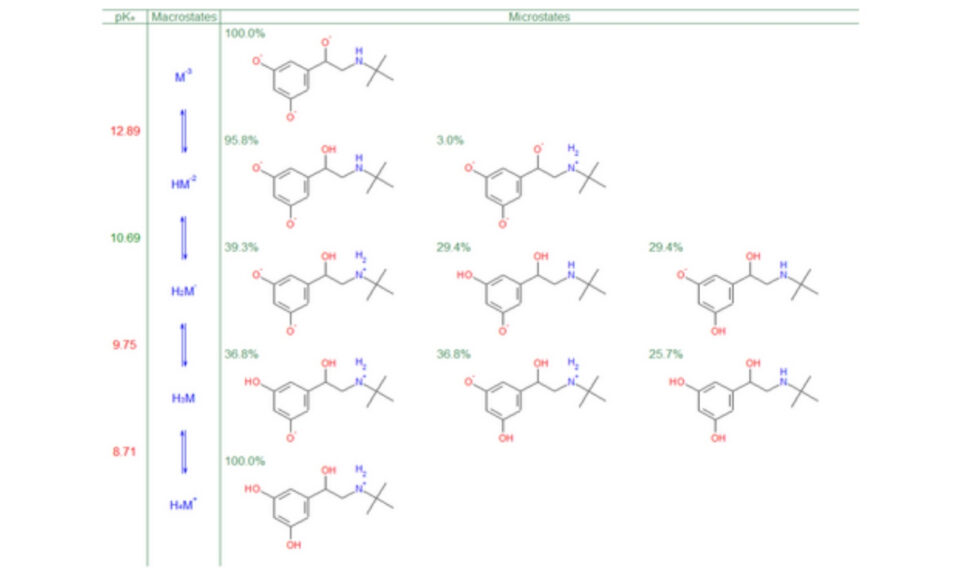
  • pKa prediction including all microstates
  • CYP metabolite generation and kinetic parameters
  • Customizable visualization tools including distribution and 2D/3D scatter plots
  • Ability to build your own machine learning models or extend ours
  • Excellent customer support
  • Incubator & Biotech Startup Program

Request a license for or evaluation of ADMET Predictor®

Biotechnology, pharmaceutical, and chemical companies license ADMET Predictor for diverse number of applications including:

  • Physicochemical property prediction of real and virtual compounds
  • Metabolite prediction
  • Toxicity prediction
  • Prediction of dose needed to achieve a specific blood level concentration
  • Analysis of high throughput screening data
  • Matched molecule pair analysis and activity cliff detection
  • SAR analysis including R-group creation and analysis
  • Similarity searching
  • Creating diverse compounds subsets
  • Enumerating combinatorial chemistry libraries
  • Calculation of various binding metrics, e.g. lipophilic ligand efficiency (LLE)

ADMET Risk™

The original Rule of 5 is widely considered to be an important development in modern drug discovery (Lipinski, et al; 1997). The Rule of 5 takes on numeric values from 0 to 4 as a measure of the compounds potential absorption liability. As such, the Rule of 5 is a useful computational filter in drug candidate screening. In terms of ADMET Predictor descriptors and models, the Rule Of 5 model rules can be formulated as follow the following set of conditions:

  • MlogP > 4.15 (excessive lipophilicity)
  • MWt > 500 (large size)
  • HBDH > 5 (too many potential hydrogen bond donors)
  • M_NO > 10 (too many potential hydrogen bond acceptors)

Most commercial drugs suitable for oral dosing violate no more than one of the rules these conditions represent.

As an extension of that concept, Simulations Plus has created a series of “ADMET Risk” rule sets and calibrated them against our own ADMET models. They are parameterized to include thresholds for a wide range of calculated and predicted properties that represent potential obstacles to a compound being successfully developed as an orally bioavailable drug. These thresholds were obtained by focusing in on a specific subset of drugs in the World Drug Index (WDI). Similar to the methodology used by Lipinski et al., we removed irrelevant compounds from a 2008 version of the WDI. In particular, we removed phosphates, antiseptics, insecticides, emollients, laxatives, etc., as well as any compound that did not have an associated United States Adopted Name (USAN) or International Non-proprietary Name (INN) identifier. The structure of the principal component in salts was extracted and neutralized, after which duplicate structures were removed. This left us with a data set of 2,316 molecules, 8.3% of which violated more than one of Lipinski’s rules.

Rule of 5 only addresses a narrow slice of the full gamut of hurdles a compound must pass before it can become a drug. In addition, it relies on “hard” thresholds: a compound with a molecular weight of 499 satisfies the MWt rule but a compound with a molecular weight of 501 violates it.

We calculated a broad range of relevant molecular descriptors and ADMET property predictions for the focused subset of WDI and identified “soft” threshold ranges for each along the lines suggested by (Petit; 2012) such that approximately 85% of the compounds in the data set satisfy them completely and somewhat less than 10% violate them completely. The former contribute nothing to the overall Risk, whereas the latter contribute the full amount (weight) specified for the corresponding rule. Predictions falling in the gray area in between contribute fractional amounts to the Risk Score. The concept is illustrated on the left.

admet-risk-1

An illustration of “soft” thresholds for an inequality rule. The score starts increasing linearly from 0 at “start value” of the descriptor in the neighborhood of the boundary B, and reaches 1 at the “end value” value of the descriptor.

Highly correlated criteria were combined into single rules using Boolean operators. The rules for identifying overly large structures, for example, is:

size (Sz): MWt > [450,550] OR N_Atoms > [32,38] OR MolVol > [475,550] OR N_Bonds > [35,41]

where the values within the brackets indicate the boundaries of threshold regions. The Sz rule includes four individual criteria, all of which use the “>” relational operator. Predictions falling below the minimum threshold values contribute nothing to the Risk, whereas predictions above the maximum contribute 1 violation “point”. Intermediate values represent intermediate risks: a compound of molecular weight 500 violates the first criterion and so would represent an incremental Risk of 0.5 points for that criterion. Logical operators such as ORs and ANDs can also be included in the rules. The combined points from the criteria making up a rule then yield an overall value between 0 and 1, which is multiplied by the weight assigned to the rule as a whole.

The overall ADMET_Risk is the sum of three risks:

  • Absn_Risk – risk of low fraction absorbed (PCB Module models)
  • CYP_Risk – risk of high CYP metabolism (MET Module models)
  • TOX_Risk – toxicity related risks (TOX Module models)

Two additional pharmacokinetic risks (high plasma protein binding and high steady-state volume of distribution) are also included in the ADMET_Risk score.

References

Lipinski CA, Lombardo F, Dominy BW, Feeney PJ. “Experimental and Computational Approaches to Estimate Solubility and Permeability in Drug Discovery and Development Settings.” Adv Drug Delivery Rev. 1997; 23:3-25.

Petit J, Meurice N, Kaiser C, Maggiora G. “Softening the Rule of Five – where to draw the line?” Bioorg Med Chem. 2012; 20:5343-5351.

Key enhancements include…

  • New Models: New models offer increased accuracy and granularity of your predictions, including areas such as liver microsomal and hepatocyte intrinsic clearance for monkeys and dogs, plasma protein binding (Fup) for monkeys and dogs, melting point, Gibbs free energy of self-solvation and hydration, and more.
  • Enhanced Models: Updates to our trusted models offer improved understanding around aqueous solubility, volume of distribution, blood-brain barrier (BBB) penetration, and more.
  • Updated Modules: The HTPK and AIDD modules have been expanded to provide more detail to your predictions and promote novelty and synthetic feasibility.
  • Expanded REST API: The latest version of our REST API supports image generation in Linux, easier property prioritization, and more.
  • + more

Download the AP13 Flyer

05. Events
Upcoming Events
06. ADMET Predictor® Publications
Peer-reviewed Publications