

See how others are advancing liver safety

DILIsym directly supports the scientific and regulatory goals of new approach methodologies (NAMs) and is the most widely used quantitative systems toxicology (QST) platform for DILI prediction. It has been used to support regulatory submissions for 38 compounds, and is utilized as a source of QST-based evidence review by the FDA’s DILI team.

How Astellas used DILIsym QST
modeling to progress fezolinetant
to Phase 3 and beyond
Read More
How DILIsym supported current
treatment guidelines for overdoses of an
extended-release acetaminophen formulation
Read More
How Biohaven used DILIsym QST
modeling to support liver safety and
gain regulatory approval
Read More

Gain mechanistic insight
for liver safety decisions

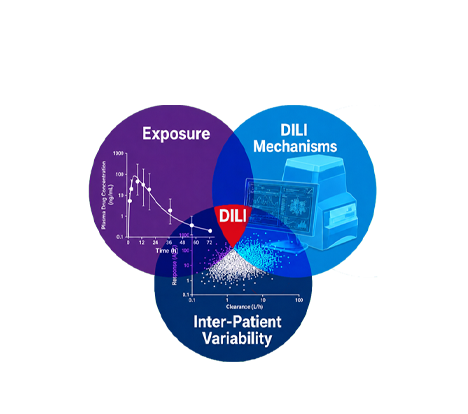
DILIsym connects data across discovery, preclinical, and clinical stages to create a unified understanding of liver safety.

  • Evaluate hepatotoxicity risk before clinical signal emerges 
  • Investigate observed liver enzyme elevations using mechanistic hypothesis testing 
  • Quantify dose-response relationships for liver injury risk 
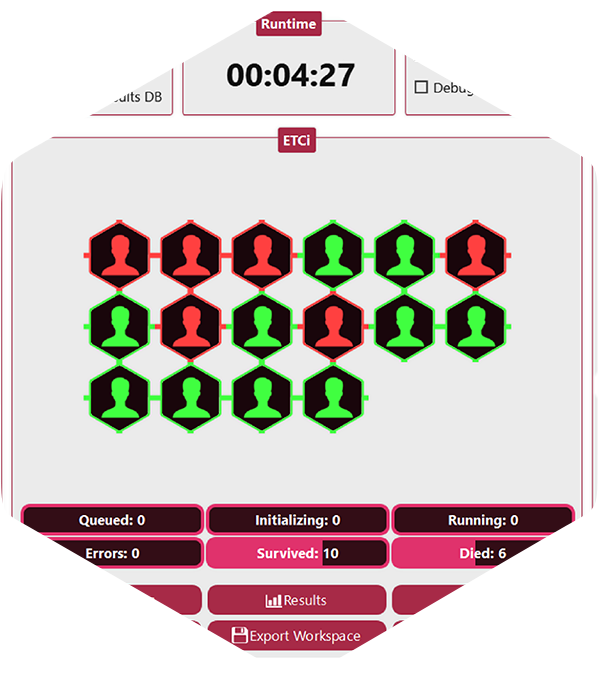
  • Explore patient variability and susceptibility factors 
  • Assess the impact of co-medications, disease states, and exposure scenarios 
  • In vitro hepatotoxicity assays 
  • Preclinical safety findings 
  • Clinical PK and exposure data 
  • Mechanistic pathways including, but not limited to: 
    • Mitochondrial dysfunction 
    • Bile acid transport inhibition 
    • Oxidative stress 
    • Immune-mediated pathways 

This allows scientists to test competing hypotheses and simulate outcomes with clarity and confidence. 

You can use DILIsym as part of your organization’s complete drug development lifecycle—from discovery with ADMET Predictor®, through development with GastroPlus® and MonolixSuite, and into clinical operations with Pro-ficiency®.

Evaluate liver safety across diverse clinical scenarios

Resources