
Significant enhancements have been made throughout both ADMET Predictor and MedChem Designer™.
DILIsym® v8A Release Webinar
DILIsym is a mechanistic, predictive software tool focused on predicting and understand drug-induced liver injury across species. DILIsym version 8A is packed with exciting new features.
Molecular Determinants of Cell Permeability Beyond the Rule of 5
Molecules that violate conventional guidelines for druglikeness—such as the Rule-of-5—are of increasing interest as chemical probes and drugs for intractable pharmacological targets.
DDDPlus v6: In Vitro Dissolution… Reimagined
In vitro-in vivo extrapolation (IVIVE) has been a major focus of biopharmaceutics research over the last 20 years, and integration of in silico models built in GastroPlus™ help researchers identify in vitro methods for...
Applying GastroPlus Modeling Establish Level A IVIVCs Waive Biostudies
Bioavailability/bioequivalence (BA/BE) evaluation by employing in vitro dissolution/release data and clinically relevant specification is required by the regulators. For BCS 1/BCS 3 drugs formulated as immediate release (IR) oral dosage forms, a BCS-based biowaiver may be granted based on the in vitro dissolution profiles generated across the physiologically relevant pH range. For drugs/formulations with dissolution/release limited/controlled absorption, establishing Level A in vitro – in vivo correlations (IVIVCs) can be applied and further utilized to assess whether BA/BE is recommended.
Applying MAM/PBPK Modeling to Predict Positive/Negative Food Effects: Approaches and Special Considerations
It is widely recognized that food can affect the absorption of orally administered drugs. In the course of pharmaceutical development, food is evaluated clinically as part of the early single or multiple ascending dose studies; additional evaluations often take place when there are formulation changes. The outcome of these studies informs dosing instructions both during the conduct of clinical trials as well as on the product label.
The India GastroPlus™ User Group Webinar: Using In Silico Inputs to Inform GastroPlus Models
Significant enhancements have been made to the HTPK Simulation, MedChem Studio™, and ADMET Modeler™ modules in ADMET Predictor 9.
ADMET Predictor 9™ Release Webinar: Streamline Your Drug Design with ADMET Predictor 9!
We are pleased to announce the release of ADMET Predictor™ 9! Significant enhancements have been made to the HTPK Simulation, MedChem Studio™, and ADMET Modeler™ modules.
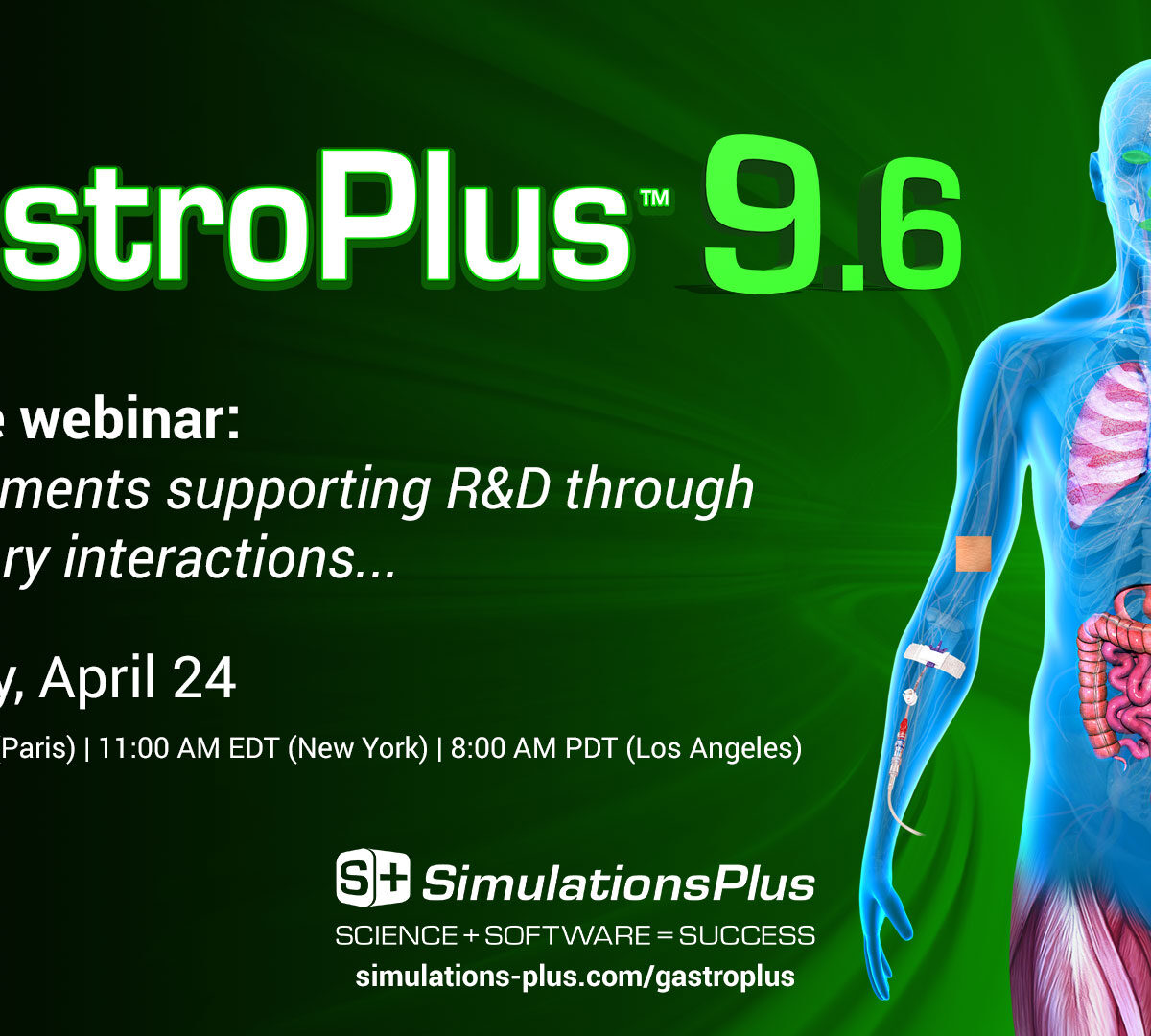
GastroPlus™ 9.6 Release Webinar: Improvements Supporting R&D Through Regulatory Interactions
We are pleased to announce the release of GastroPlus™ 9.6! These improvements in our top-ranked PBPK modeling platform support discovery/preclinical/clinical R&D work through regulatory interactions.
Discovery PBPK: How to enhance the expected accuracy of bioavailability predictions for NCEs that are not primarily metabolized
In this webinar, we will review the accuracy of purely in silico estimates of bioavailability and the chemistry classification of new chemical entity (NCE) molecules that are easier or harder to...
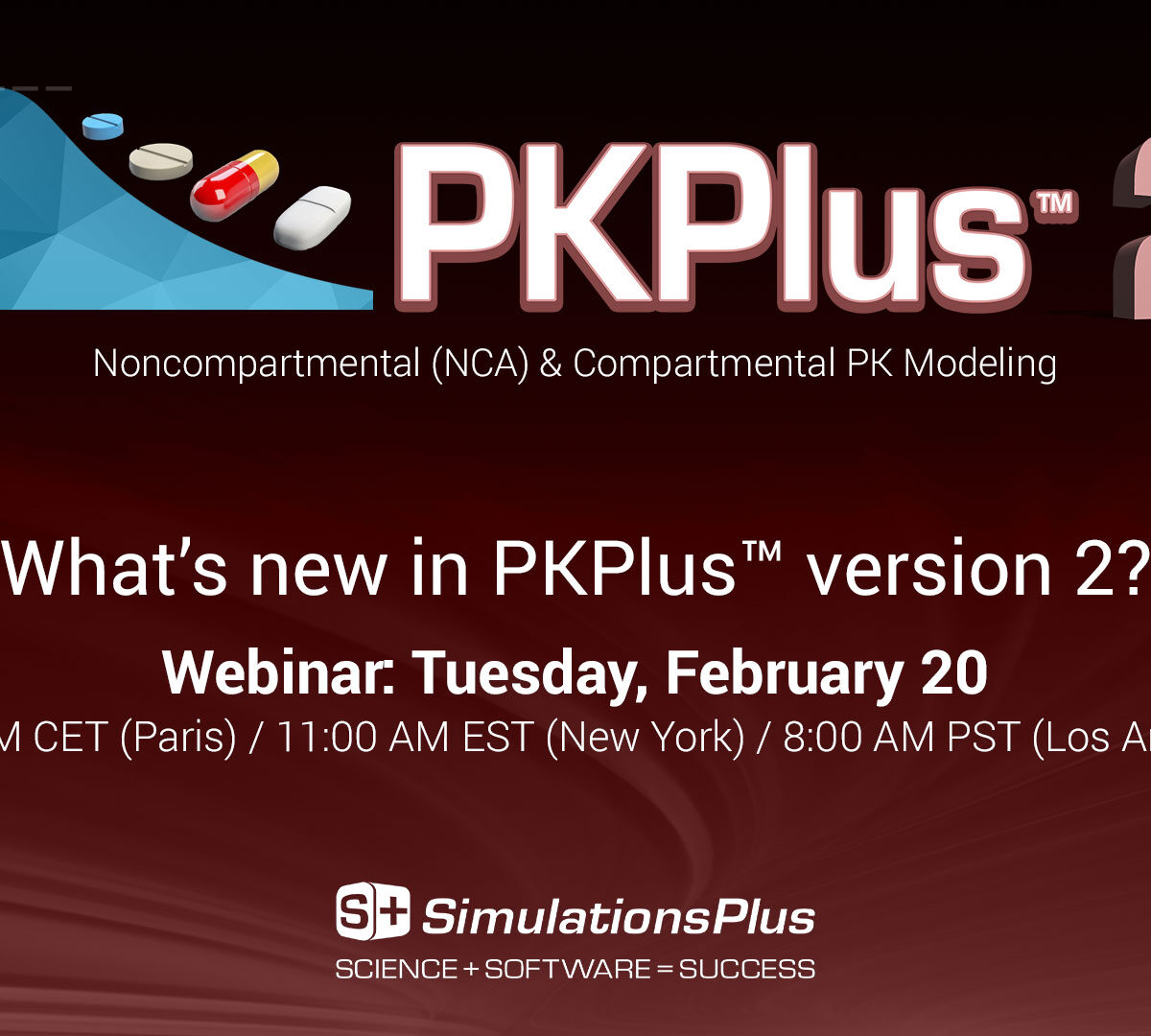
What’s new in PKPlus™ version 2?
In this webinar, we will demonstrate how PKPlus 2 combines functionality and flexibility for all PK analyses, providing the capabilities to meet the needs of scientists across departments at...
What’s New in DILIsym® v7A?
Learn about the new features in DILIsym v7A that provide important new capabilities to enable our customers to better assess the potential for liver damage from new and existing drug compounds.
Mechanistic In Vitro Dissolution PBPK Models to Drive Drug Development
In this webinar, DDDPlus™, an in vitro simulation platform focused on providing predictive dissolution & precipitation tools for formulation development, will be presented in conjunction with GastroPlus™ to...
ADMET Predictor™ v8.5 Webinar – Discover ‘Discovery PBPK’: Efficiently use PBPK modeling to drive lead selection & optimization
In this video, Michael Lawless discusses how to efficiently screen large compound libraries in minutes based on predicted in vivo fraction absorbed (Fa%) or oral bioavailability (F%) in virtual rats...
Understanding dermal drug disposition using TCAT™ – a novel PBPK model
Scientists from GlaxoSmithKline and Simulations Plus have collaborated to develop a mathematical model, Transdermal Compartmental Absorption & Transit (TCAT™), that allows better understanding of drug penetration through the skin while accounting for the formulation characteristics, evaporation and precipitation effects that influence dermal delivery.
MembranePlus™ v2 webinar: Stimulate your kinetic understanding…
We are pleased to announce the release of MembranePlus™ v2! This version takes modeling of in vitro systems to the next level, allowing you to capture all relevant information from your experiments.
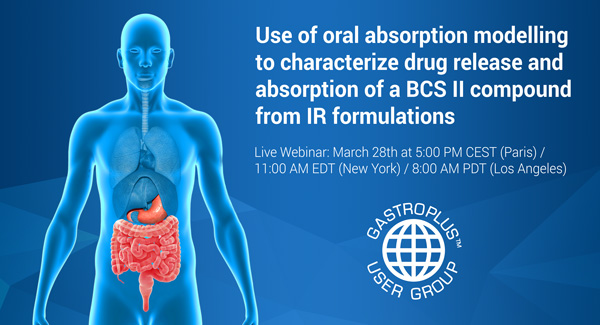
Use of oral absorption modelling to characterize drug release and absorption of a BCS II compound from IR formulations
The presentation illustrates the applicability and impact of mechanistic absorption modelling to support oral formulation development and improve the prediction of drug bioavailability from immediate-release formulations.
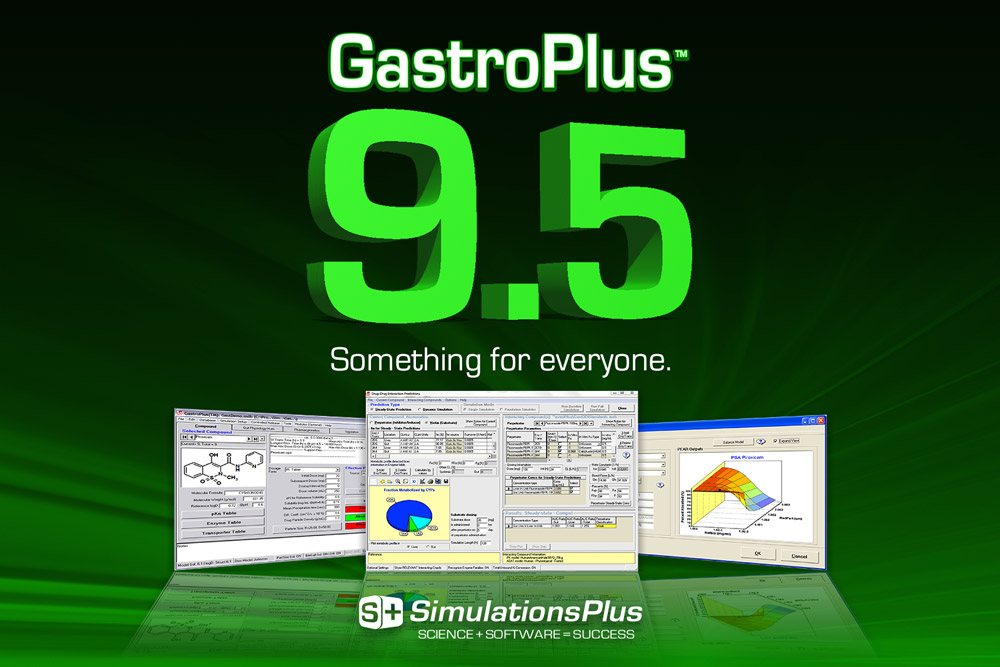
GastroPlus™ 9.5 Release Webinar: Something for Everyone
We are pleased to announce the release of GastroPlus™ 9.5! This version has something for all users of our top-ranked PBPK modeling platform.
ADMET Predictor 8.1: Efficiently handle LARGE data sets
Building off of the successful launch of the redesigned ADMET Predictor 8.0, many substantial enhancements have been made throughout version 8.1 to improve performance.
Incorporating transporter kinetics into PBPK models
This webinar will focus more on transporters involved in drug distribution and elimination. A brief summary of current information on transporter expression levels will be followed by a description of options for including transporters in the GastroPlus™ PBPK model.